

Body Mass Index (BMI) is a simple, reliable way to estimate whether your weight is healthy for your height. Use our free BMI Calculator to quickly find out your BMI category — underweight, healthy, overweight, or obese — and get actionable tips for improving your health.
What is BMI (Body Mass Index)?
Body Mass Index (BMI) is a simple numerical value that helps estimate whether your body weight is in a healthy range for your height. It’s calculated using the formula:
BMI = weight (kg) ÷ height² (m²)
BMI is widely used by healthcare professionals, nutritionists, and fitness experts to assess weight-related health risks.
Quick Facts:
- A low BMI may indicate being underweight, which can lead to nutrient deficiencies and weakened immunity.
- A high BMI may indicate being overweight or obese, which can increase the risk of diabetes, heart disease, and joint problems.
- BMI is a general guideline and may not accurately reflect muscle mass vs. fat percentage.
BMI (Body Mass Index) is a number calculated from your weight and height. It helps categorize your body weight into different ranges, such as:
- Underweight: BMI < 18.5
- Healthy weight: BMI 18.5 – 24.9
- Overweight: BMI 25 – 29.9
- Obesity (Class I): BMI 30 – 34.9
- Obesity (Class II): BMI 35 – 39.9
- Obesity (Class III): BMI ≥ 40
Note: While BMI is a useful screening tool, it doesn’t account for muscle mass, bone density, or body fat percentage.
BMI Categories Chart
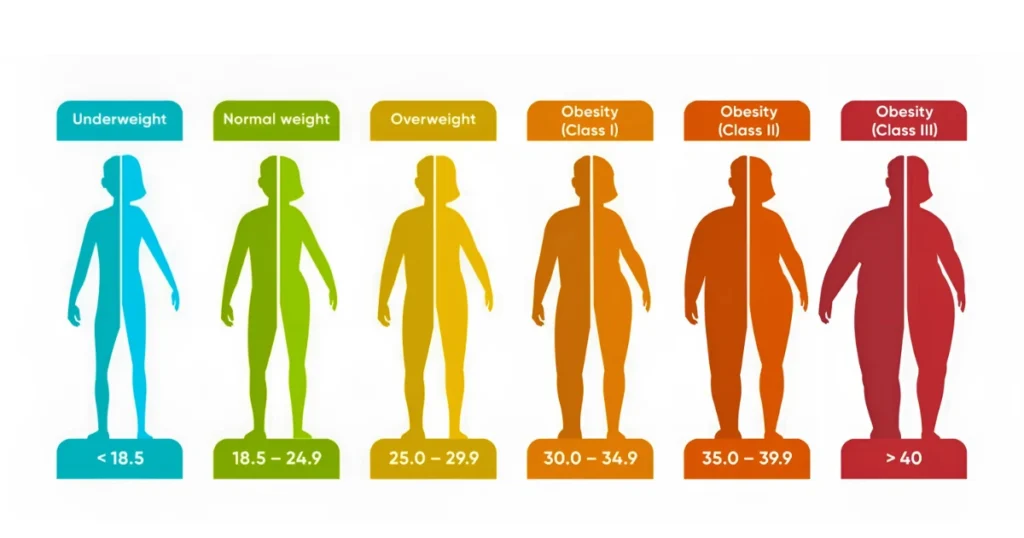
BMI Categories & Classification : Quick Reference Table
| Category | BMI Range (kg/m²) |
|---|---|
| Underweight | Below 18.5 |
| Normal Weight | 18.5 – 24.9 |
| Overweight | 25.0 – 29.9 |
| Obesity (Class I) | 30.0 – 34.9 |
| Obesity (Class II) | 35.0 – 39.9 |
| Obesity (Class III) | 40.0 and above |
Calculate Your BMI
Check Your BMI
How to Calculate Your BMI (Manually)
- Measure your height in meters (m) and weight in kilograms (kg).
- Use the formula: BMI = weight (kg) ÷ [height (m)]².
- Compare your result to the BMI category chart above.
Why BMI Matters
Maintaining a healthy BMI reduces your risk of developing conditions such as heart disease, diabetes, and certain cancers. While BMI is not perfect, it’s an easy starting point for understanding your weight status.
Early Health Risk Detection
BMI is a quick and easy way to spot potential weight-related health issues before they become serious.
Setting Fitness & Wellness Goals
Whether you want to lose weight, gain weight, or maintain your current weight, knowing your BMI helps guide your plan.
Medical Consultations
Doctors often use BMI as a starting point to discuss lifestyle changes, nutrition, and preventive care.
Limitations of BMI
While BMI is a useful screening tool, it has limitations:
- It does not measure body fat percentage directly.
- Athletes with high muscle mass may have a high BMI but low body fat.
- It does not account for body composition differences between genders and age groups.
For a more accurate health assessment, combine BMI with other measurements like waist circumference, body fat analysis, and medical check-ups.
Improve Your BMI & Overall Health
At GlamFit by GlamGyno, our doctor-led weight loss and wellness programs can help you:
- Achieve a healthy BMI through a personalised diet plan
- Improve metabolism with holistic lifestyle coaching
- Monitor health markers like blood sugar, cholesterol, and hormones
📞 Book your consultation in Goa today!
Frequently Asked Questions (FAQ)
Q: What is a healthy BMI for adults?
A: A BMI between 18.5 and 24.9 is generally considered healthy.
Q: Is BMI accurate for everyone?
A: No. It may overestimate body fat in muscular individuals and underestimate it in older adults with low muscle mass.
Q: How often should I check my BMI?
A: Every 3–6 months is a good interval unless you’re actively on a fitness or weight-loss plan.